




What are PFAS?
PFAS (per- and polyfluoroalkyl substances) are synthetic chemical compounds that have been in use since the 1940s. They are found in everyday products such as nonstick cookware, waterproof textiles, food packaging, and certain firefighting foams.
What makes them special? They are extremely resistant to natural degradation, hence their nickname "eternal pollutants." Once present in the environment or in our bodies, they remain there for a very long time.
Why are PFAS a problem?
PFAS can accumulate in the human body and the environment. Long-term exposure has been linked to various health issues:
- an increased risk of cancer (kidney, testicles),
- hormonal disorders, particularly affecting the thyroid gland,
- a weakened immune system,
- effects on child development.
Recent studies have revealed their presence in the drinking water of millions of people around the world, particularly in the United States and Europe.
How do PFAS end up in our water?
Water contamination by PFAS mainly stems from human activity. The main sources are:
- Industrial discharges: Factories using PFAS can release them into rivers and groundwater, contaminating the water we consume.
- Landfills: Waste containing PFAS, buried in the ground, can seep into groundwater via runoff.
- Firefighting foams: Often used on military bases, airports, or fire stations, these foams can seep into the ground and water supplies.
What solutions are available for filtering PFAS at home?
In light of these risks, several technologies are now available to reduce or eliminate PFAS from tap water.
- Activated carbon filtration: Activated carbon captures PFAS, especially long-chain PFAS. It is widely used in domestic systems, although it requires regular replacement.
- Reverse osmosis: This technology forces water through a membrane that retains pollutants. It removes a wide variety of substances, including PFAS. It is a very effective solution, but it can generate wastewater and requires maintenance.
- Ion exchange resins: These resins replace PFAS ions with harmless ones. This process is reliable but also requires frequent maintenance and has higher operating costs.
- Foam fractionation: Less well known, this process exploits the molecular structure of PFAS to trap them in foam bubbles. Some companies are already incorporating it into advanced treatment systems.
The limitations of these methods
Although effective, these solutions are not always easy to implement at home. They often require a significant initial investment and regular maintenance. In addition, certain technologies, such as reverse osmosis, generate waste that must be treated properly.
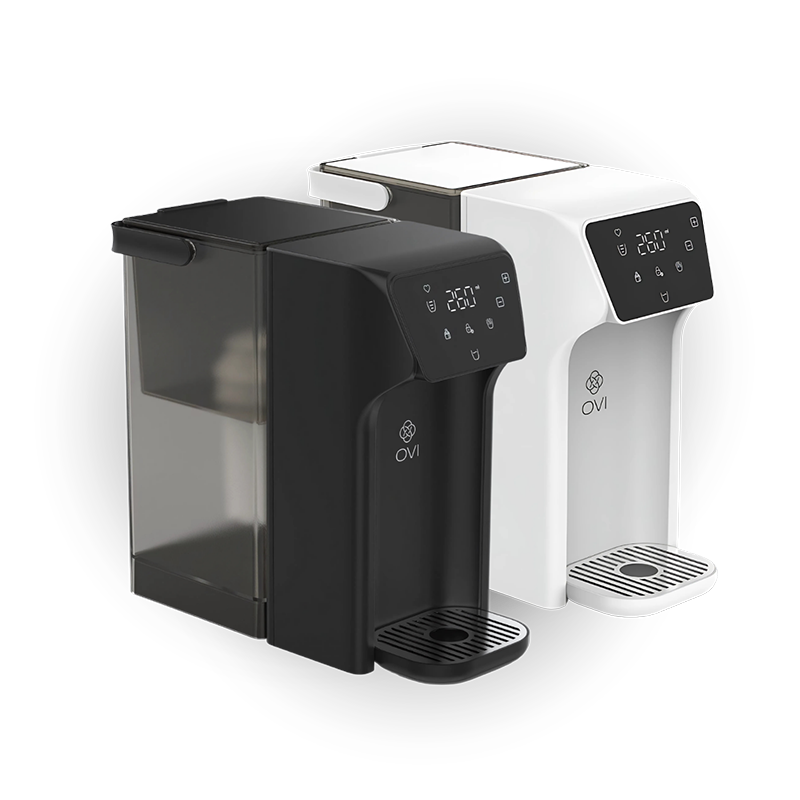
An innovative solution: the OVI II
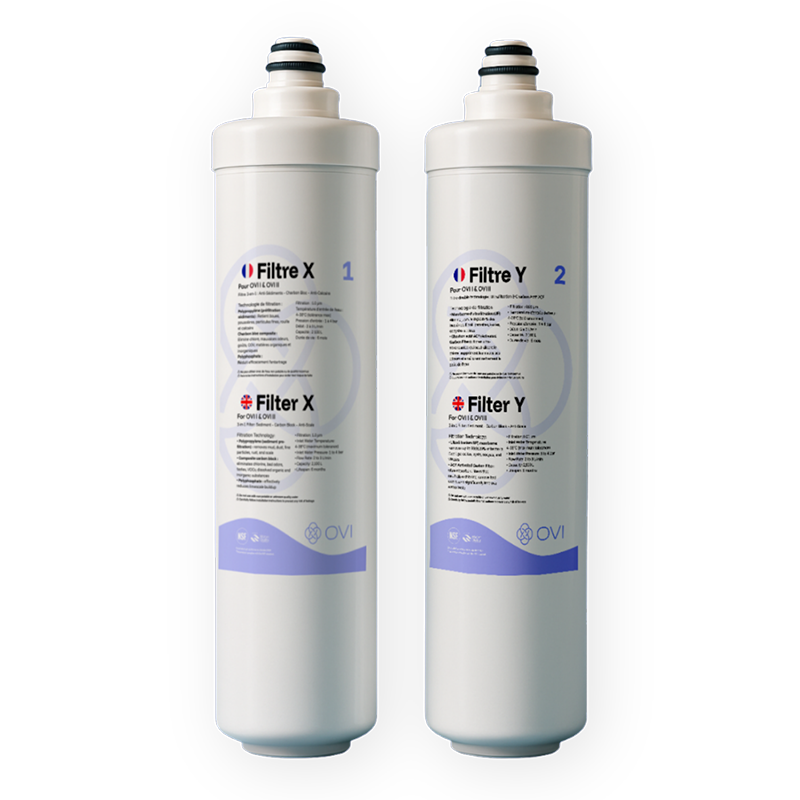
Our OVI II water filter fountain offers a simple, effective, and elegant alternative. It filters water in three stages to remove contaminants while retaining minerals that are essential to health.
It provides hot, warm, room temperature, or cold water at any time with a simple touch. Its built-in technology effectively treats tap water, particularly PFAS, while blending seamlessly into the kitchen.
In addition to being economical, it also drastically reduces the use of plastic bottles. A solution that is good for your health, your wallet, and the planet.

