
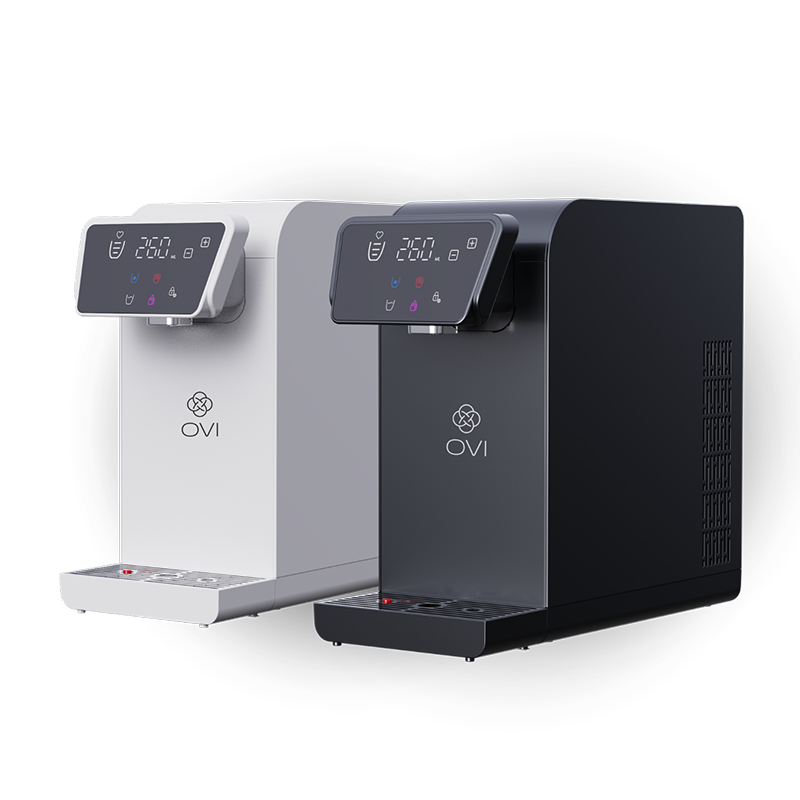
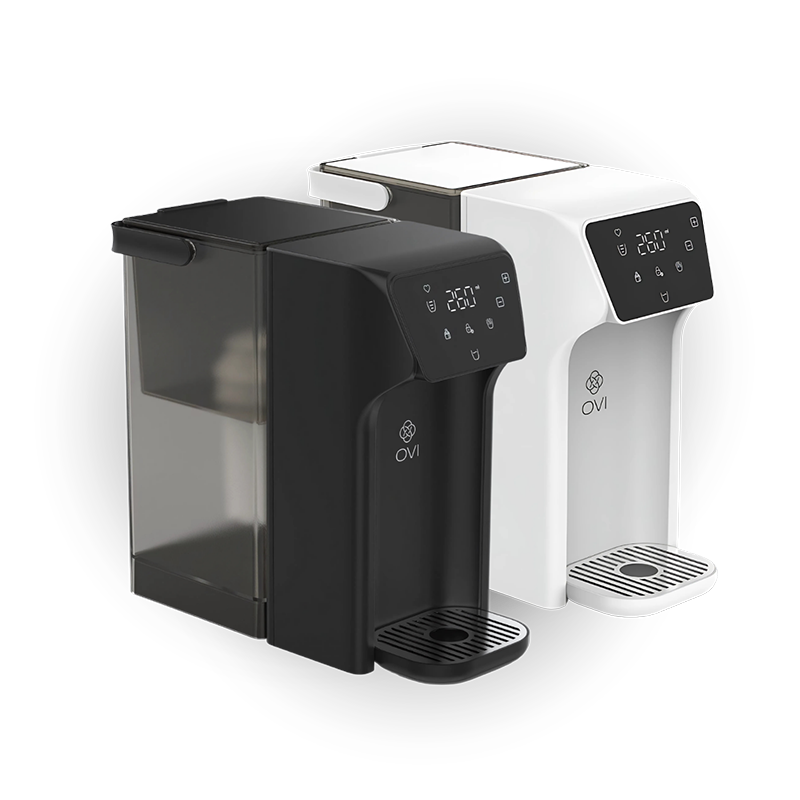
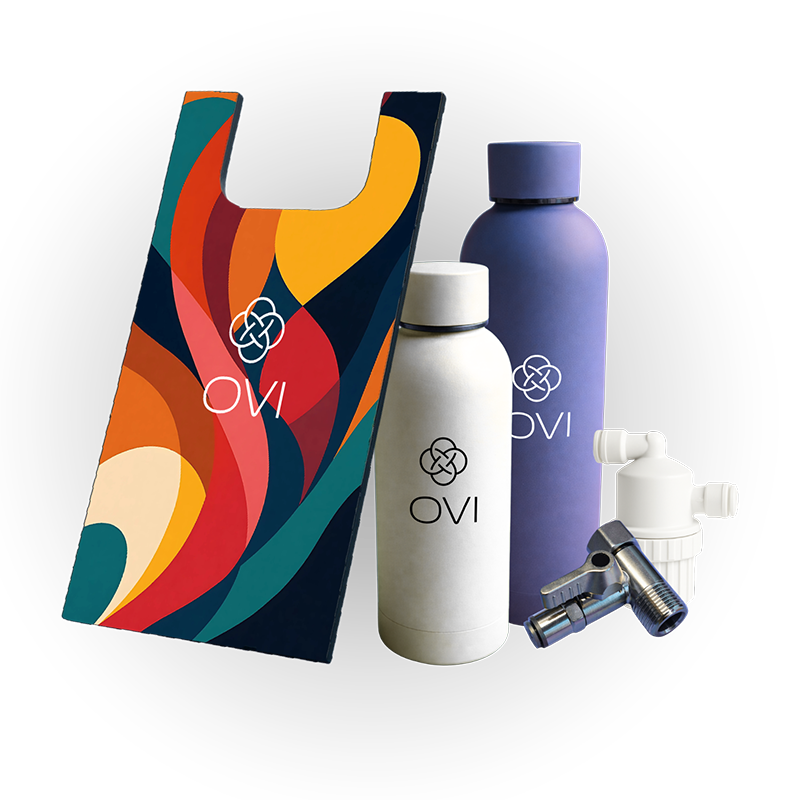

Why filter tap water? To reduce exposure to unwanted traces (chlorine, PFAS, metals), stabilize taste, limit limescale in your appliances, and encourage daily hydration at home and at the office. For families, it provides reassuring water for baby bottles, teas/infusions, and cooking, while avoiding plastic bottles.
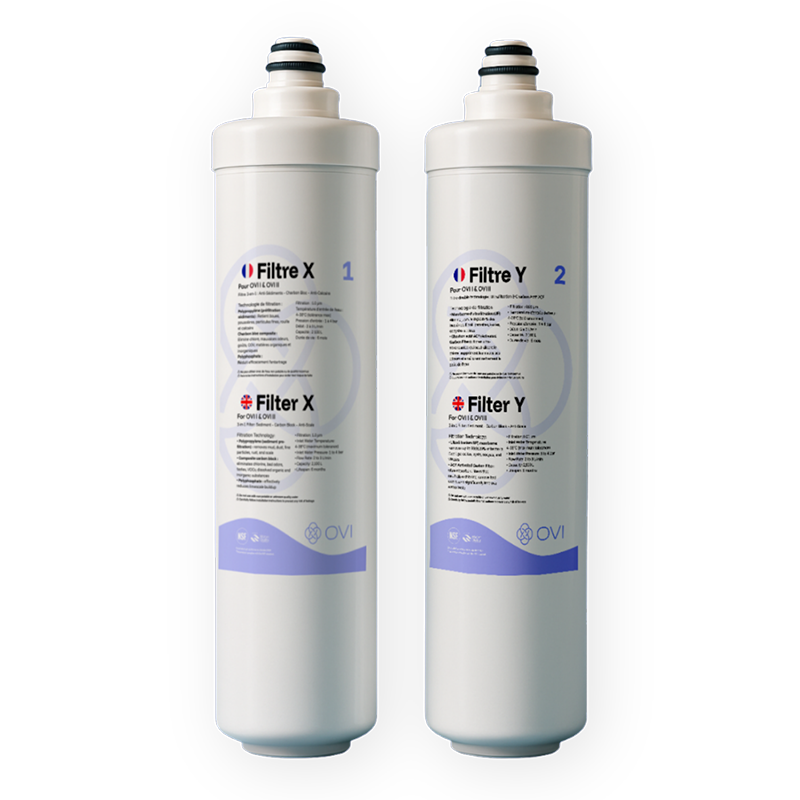
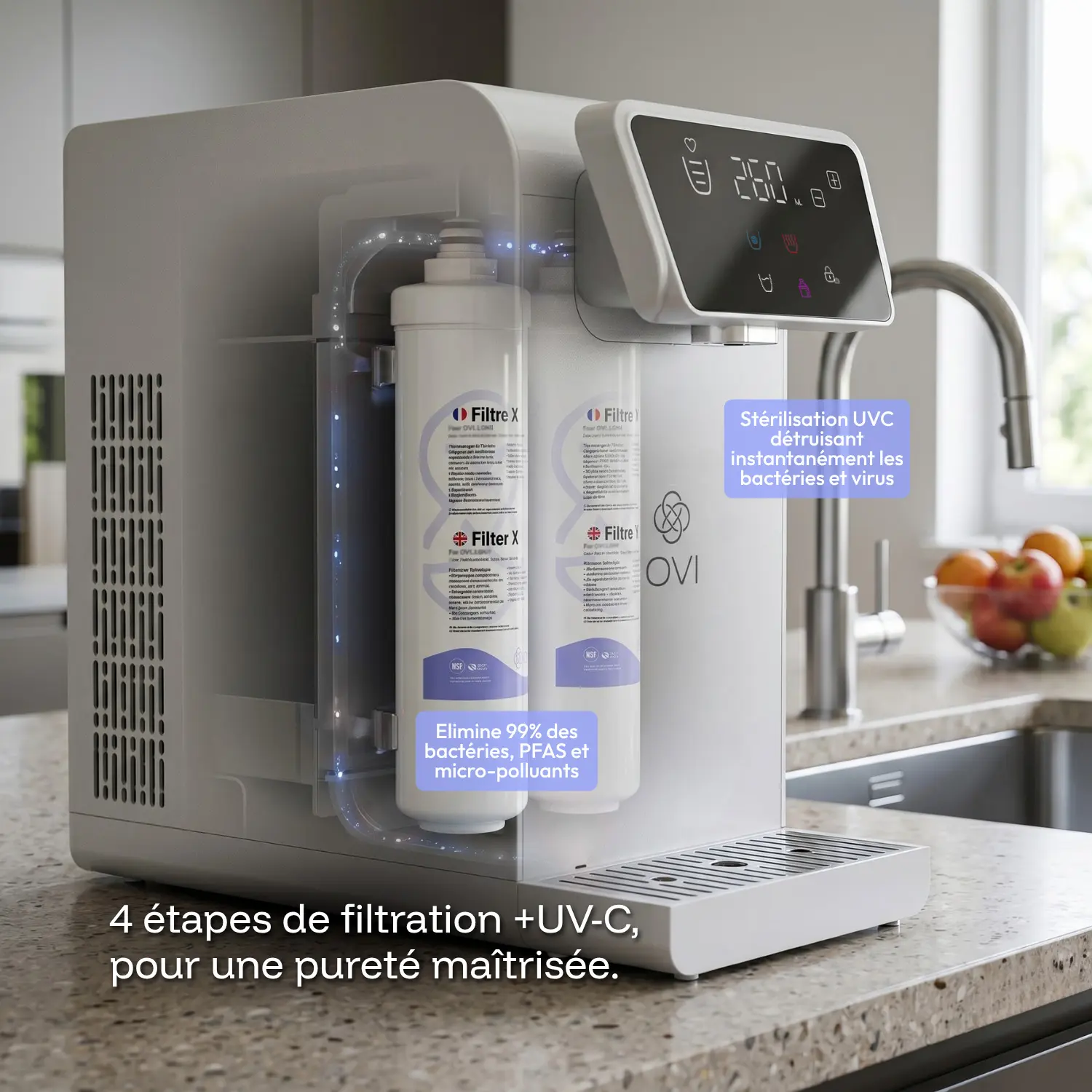
Our system combines four complementary filtration levels:
- Sediment pre-filter : Traps sludge, dust, fine particles, and rust
- Composite activated carbon and polyphosphate: Removes chlorine, odors, tastes, Volatile Organic Compounds (VOCs), and organic and inorganic substances, PFAS and reduces tartar buildup
- Ultrafiltration membrane (UF 0.01 µm): removes up to 99.9999% of bacteria, E. coli, parasites, cysts, oocysts, and viruses
- UV-C Sterilization LED (up to 99.9% of bacteria and viruses).
The result: healthy, clear, pleasant-tasting water that preserves essential minerals.
Weengaged independent, recognized laboratories to ensure that the tests were as robust as possible (deliberate contamination followed by analysis).
Tests show near-total elimination of PFAS (PFOS, PFOA, PFNA, PFDA, PFBS ≈ -100%, PFBA ≈ -95%) and heavy metals ( lead, arsenic, etc.), as well as an absence of indicator bacteria after filtration.
Over 99% of PFAS and other pollutants are filtered out!

Our filters are certified to NSF/ANSI standards, ensuring reliable purification and compliance with international safety standards.


Discover the results of our latest tests, focusing on PFAS
We have commissioned independent laboratories to test and quantify the effectiveness of our filtration system on per- and polyfluoroalkyl substances, more commonly known as PFAS. These particularly resistant compounds are already classified as "carcinogenic to humans"(PFOA) or "possibly carcinogenic to humans"by the International Agency for Research on Cancer (IARC).
|
After filtration

|
Reference values | |
|---|---|---|
|
Perfluorobutanesulfonic acid PFBS -100%
|
< 0.01 μg/kg | 1.78 μg/kg |
|
Perfluorooctane sulfonic acid PFOS -100%
|
< 0.01 μg/kg | 1.98 μg/kg |
|
Perfluorooctanoic acid PFOA -100%
|
< 0.01 μg/kg | 1.96 μg/kg |
|
Perfluorobutanoic acid PFBA -95,3%
|
0.09 μg/kg | 1.84 μg/kg |
|
Perfluorononanoic acid PFNA -100%
|
< 0.01 μg/kg | 1.89 μg/kg |
|
Perfluorodecanoic acid PFDA -100%
|
< 0.01 μg/kg | 2.01 μg/kg |
Our results
Tests carried out by the Alpes-Maritimes Departmental Laboratory, the department's reference laboratory for water analysis.
| Bacteria and Viruses |
After filtration
|
Reference values |
|---|---|---|
|
Coliform bacteria Standard NF EN ISO 9308-1, 9/2000 |
Absence in 100 ml | Absence in 100 ml |
|
Escherichia coli Standard NF EN ISO 9308-1, 9/2000 |
Absence in 100 ml | Absence in 100 ml |
| Intestinal enterococci Standard NF EN ISO 7899-2 |
Absence in 100 ml | Absence in 100 ml |
| Pathogenic staphylococci Standard NF T 90-412 |
Absence in 100 ml | Absence in 100 ml |
| Pseudomonas aeruginosa Standard NF EN ISO 16266 |
< 1 CFU/100 ml | < 1 CFU/100 ml |
| Metals and others |
After filtration
|
Reference values |
|
Nitrates -98%
|
1mg/L | 50 mg/L |
|
Nitrites -98%
|
< 0.1 mg/L | 0.5 mg/L |
| pH | 7.61 at 18°C | From 6.5 to 9 |
|
Nephelometric turbidimetry -100%
(NF EN 7027) |
0,00 NFU | < 2 NFU |
|
Total ammonium -100%
|
0.00 mg/L NH4+ | < 0.1 mg/L |
|
Aluminum -97.5%
|
5 μg/L | 200 μg/L |
|
Arsenic -90%
|
< 1 μg/l | 10 μg/L |
|
Boron -99.9%
|
< 1 μg/l | 1000 μg/L |
|
Barium -98%
|
12 μg/L | 700 μg/L |
|
Cadmium -80%
|
< 1 μg/l | 700 μg/L |
|
Chrome -96%
|
2 μg/L | 50 μg/L |
|
Copper -99.9%
|
1 μg/L | 1000 μg/L |
|
Iron -99.5%
|
< 1 μg/l | 200 μg/L |
|
Nickel -55%
|
9 μg/L | 20 μg/L |
|
Lead -90%
|
< 1 μg/l | 10 μg/L |
|
Selenium -93%
|
< 1 μg/l | 15 μg/L |
|
Uranium -93%
|
1 μg/L | 15 μg/L |
|
Zinc -96%
|
122 μg/L | 3000 μg/L |
|
Mercury -90%
|
< 0.1 μg/l | 1 μg/L |

