
Access to high-quality drinking water is a crucial public health issue. Due to increasing water pollution, many consumers are looking for effective solutions to purify tap water. Discover the main filtration technologies and how they compare.
Activated carbon filters: a simple but limited solution
Principle
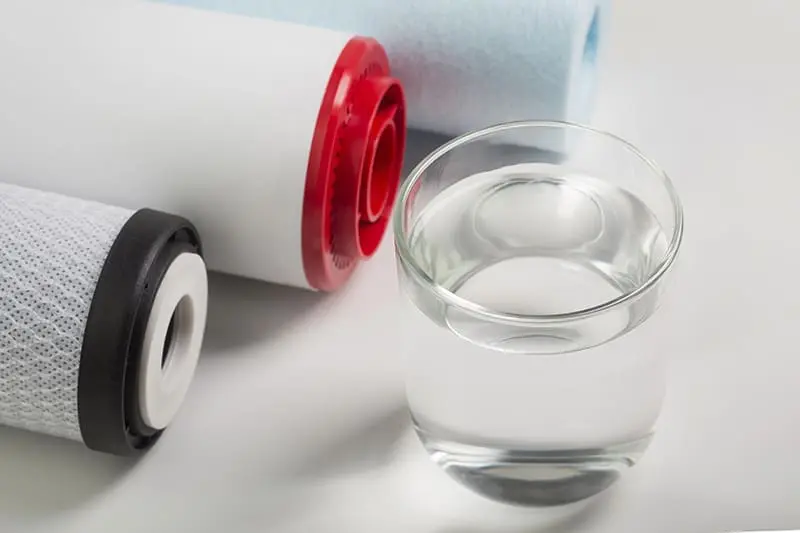
Activated carbon is a highly porous material that can adsorb chemicals present in water, including chlorine, pesticides, and certain organic residues.
Benefits
Activated carbon filters significantly improve the taste and smell of water by removing chlorine and volatile organic compounds. They are also very easy to install. You can choose from filter jugs, filters that attach to the tap, or filters that install under the sink. What's more, it is reasonably priced and relatively easy to maintain, as the filter only needs to be replaced every 1 to 3 months.
Disadvantages
However, this technology has its limitations. Activated carbon is ineffective against heavy metals such as lead or arsenic, and does not retain dissolved substances such as nitrates. Furthermore, it does not offer protection against bacteria, viruses, or drug residues. The filters become clogged quickly and must be replaced frequently to remain effective.
Ideal for
Activated carbon filters are particularly suitable for those looking to improve the taste and smell of water, but without the need for advanced filtration.
Gravity filters: practical but limited
Principle
Gravity filters, such as Berkey or Doulton models, use ceramic or activated carbon cartridges to filter water by gravity. This system requires no electricity or pressure.
Benefits
One of the main advantages of gravity filters is that they do not rely on the electrical grid, making them ideal for remote areas or for use in emergencies. They are also effective at removing certain contaminants, such as bacteria, sediment, and certain chemicals. The filters have a very long service life, lasting for up to several thousand liters.
Disadvantages
However, the gravity filtration process can be quite slow, sometimes taking several hours to filter a few liters of water. Efficiency varies depending on the model, with some filters unable to retain PFAS or heavy metals. Regular maintenance is necessary to prevent bacterial growth in the filters.
Ideal for
Gravity filters are ideal for those looking for a portable solution that is easy to use and does not require complex installation.
Reverse osmosis: maximum purification but with drawbacks
Principle
Reverse osmosis is an advanced filtration method that forces water through an ultra-fine semi-permeable membrane. This membrane blocks almost all contaminants, including pesticides, nitrates, heavy metals, PFAS, bacteria, and viruses.
Benefits
This technology is extremely effective and can remove up to 99% of contaminants, including micropollutants such as PFAS. It is also particularly effective against viruses and bacteria, making it an ideal option for those seeking ultra-pure water.
Disadvantages
Unfortunately, reverse osmosis also has disadvantages. It wastes water: for every liter filtered, between 2 and 4 liters are discarded as wastewater. In addition, this filtration removes essential minerals from the water, which may require a remineralization system. Its initial cost is high, and professional installation is often necessary. The flow rate is also lower compared to other filtration systems.
Ideal for
Reverse osmosis is ideal for those who want ultra-pure water and are willing to deal with the constraints of maintenance and water waste.
Modern fountains with advanced filtration (e.g., Ovibar)
Principle
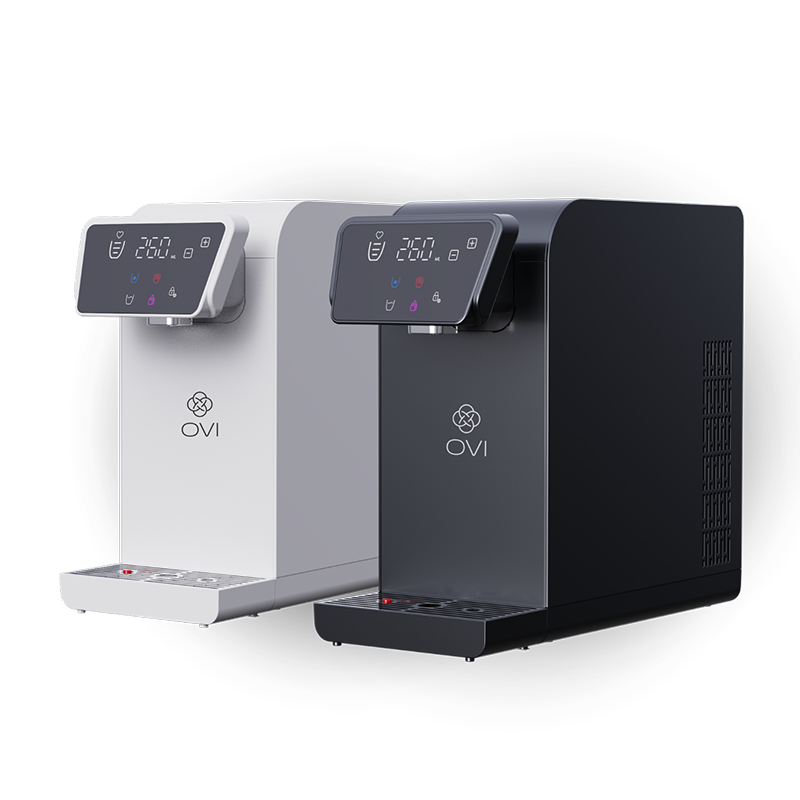
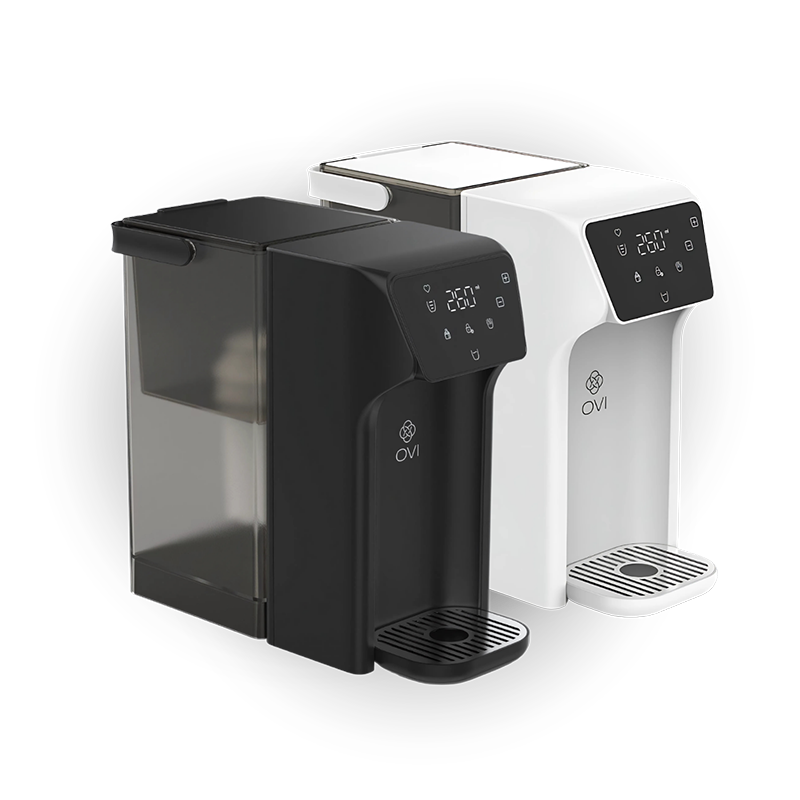
Modern water coolers, such as the Ovibar, combine several filtration technologies, including activated carbon, microfiltration, and UV purification. They offer highly effective water purification while providing instant access to hot, cold, or room-temperature water.
Benefits
One of the great advantages of these fountains is their ability to effectively remove contaminants, including PFAS, chlorine, and heavy metals. Unlike reverse osmosis, these fountains do not waste water. They retain essential minerals, ensuring high-quality water. In addition, they are very easy to use, with direct access to instantly filtered water.
Disadvantages
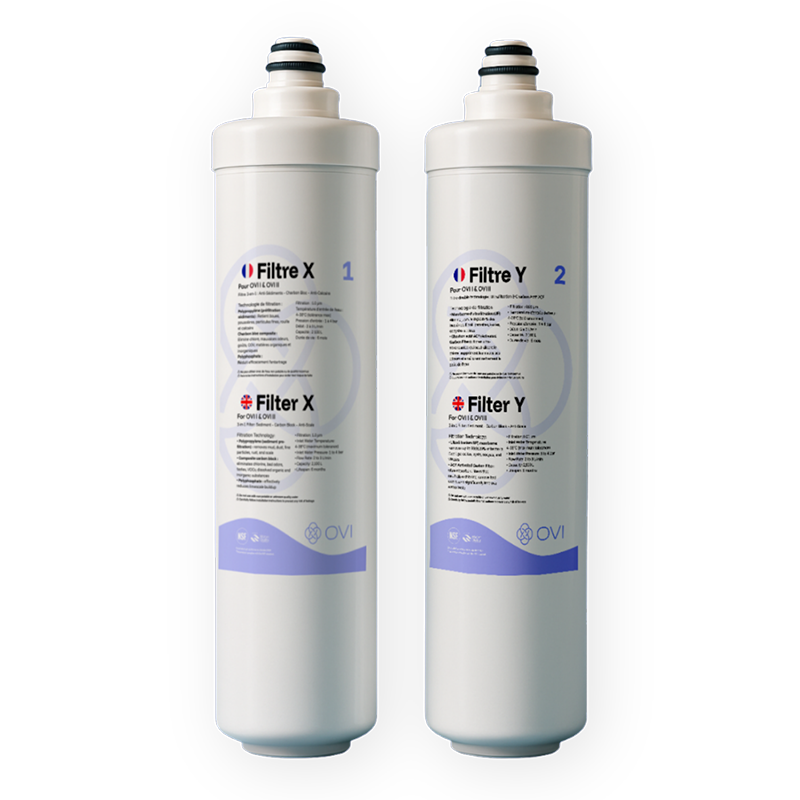
The main disadvantage is the higher initial cost compared to other solutions. However, in the long term, they are often more cost-effective. Filters also need to be replaced, but this is less of a hassle than with a reverse osmosis system.
Ideal for
Fountains such as the Ovibar are ideal for those looking for a comprehensive, high-performance, and practical solution, while enjoying pure water without waste.
By choosing the filtration system that suits your needs, you can guarantee high-quality water every day, protecting your health and the environment.